Ukrainian Drone Pilot Expertise Reshapes US Military Training
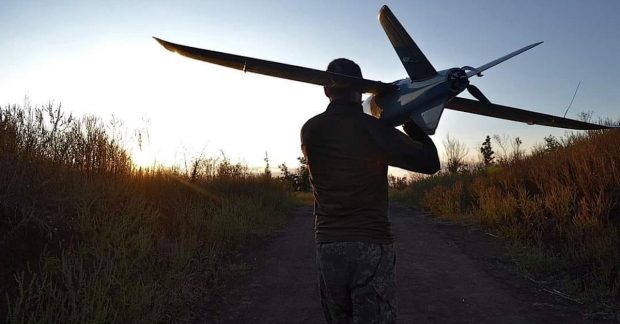
US Army instructor James Andreasen is integrating methods from Ukraine's Killhouse academy into American military training programs following his visits to Ukraine.
 🎓Education
Photo: UNIAN
Key points
- US instructor James Andreasen visited Ukraine's Killhouse academy twice to study drone tactics.
- The US Army is adopting Ukrainian methods for drone maintenance and operator protection.
- Training programs in the US now include precision flying exercises under EW interference.
American military specialists have begun actively implementing the experience of Ukrainian drone operators into their own training programs. James Andreasen, a Chief Warrant Officer in the US Army Aviation and an instructor at Fort Rucker, visited the Ukrainian Killhouse academy twice to study UAV pilot training methods under real combat conditions. The insights gained have already become the basis for updating the American UALC course.
Technical Autonomy and Operator Survival
One of the key differences that impressed the American officer was the approach to technical maintenance. In Ukraine, cadets learn to independently repair and program drones, understanding the operation of every system. While the US Army has traditionally relied on more complex and expensive systems, the Ukrainian experience has proven the effectiveness of using simple, often donated solutions adapted for specific tasks.
The Killhouse academy pays special attention to the safety of the pilot. Contrary to initial American military concepts of operating a drone from behind a simple tree, Ukrainian practice dictates the need for serious position fortification. Furthermore, training takes place under constant electronic warfare (EW) interference, bringing the drills as close as possible to combat realities where a stable signal is rare.
Precision Over Speed
Instead of flashy maneuvers and high speed, Ukrainian instructors focus on surgical precision. Cadets are taught to keep the drone stationary, fly at critically low altitudes, and maneuver inside buildings. Andreasen noted that these exercises were directly copied and transferred to the American training curriculum.
This exchange of experience demonstrates how Ukrainian innovations born on the battlefield are becoming new global standards. For residents of frontline areas like Nikopol, this confirms the critical importance of developing local technological initiatives and specialized education in the UAV field. The high praise from US specialists indicates that Ukrainian methodologies are currently the most relevant in the world.
Source UNIAN — unian.ua/weapons/akademiya-killhouse-yak-ukrajinskiy-dosvid-zminyuy… ↗
Read next
 🚨Events
Air Assault Forces Deny Reports of New Border Breakthrough in Kursk Region
The Command of the Air Assault Forces has officially denied social media rumors regarding an alleged new breakthrough by Ukrainian forces and the capture of a settlement …
 🏛️Politics
Debate over NABU's methods: SAP prosecutor highlights the agency's media team
SAP prosecutor Rostyslav Batih addressed criticism regarding the substitution of evidence with media campaigns, praising the professionalism of NABU's video editors.
 ⚽Sport
ATP Finals Review: Carlos Alcaraz Dominance and the Next Generation Outlook
Sports commentators summarize the end-of-season ATP tournament, highlighting the triumph of Spanish tennis player Carlos Alcaraz and the success of young athletes.
 🩺Health
Scientists Identify Two Age Milestones When Human Immunity Ages the Fastest
A new study reveals that the human immune system does not age gradually, highlighting two sharp decline periods around age 40 and after 60.
 🧠AI Analysis
Artificial Intelligence on the Battlefield: How Ukrainian Ground Robots Move Toward Autonomy
Ukrainian developers of ground robotic systems are actively implementing artificial intelligence elements to minimize dependence on operators and communication.
 🎭Culture & Sport
Historical Field Discovery: How a Random Find Revealed Secrets of King Alfred
Archaeological mysteries sometimes emerge from routine fieldwork, such as the discovery of a medieval English monarch's jewel during plowing.