Scientists turn cacti into organic electricity sources
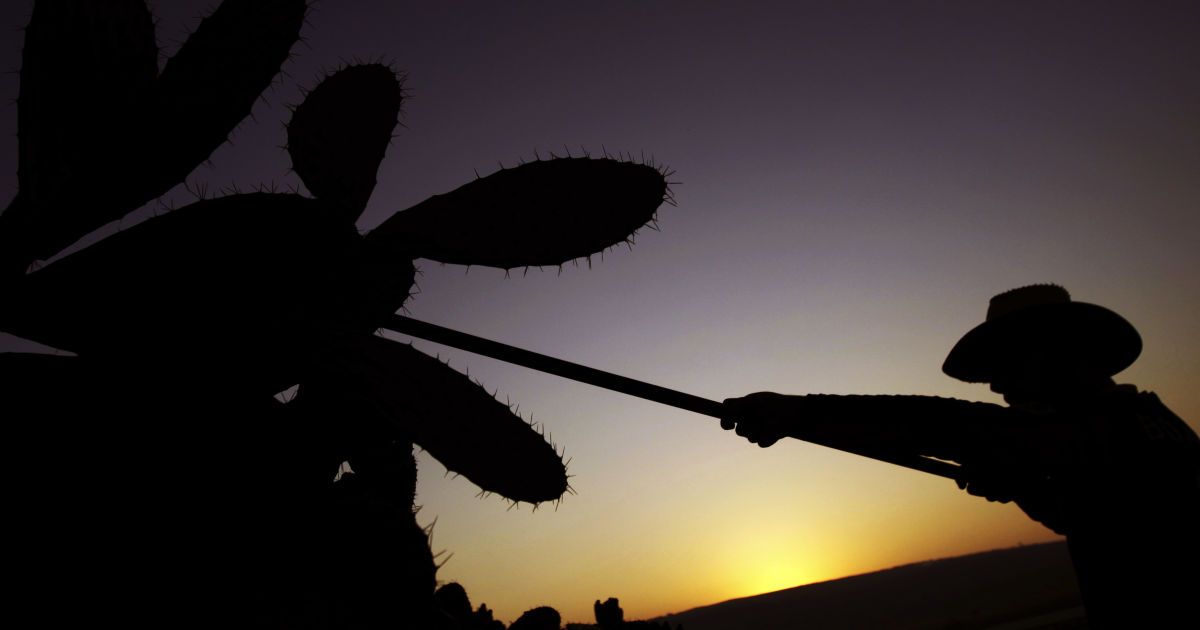
Researchers from the University of California have developed a method to generate electric current using prickly pear cacti by leveraging their unique photosynthesis mechanism.
 💡Tech
Photo: TSN
Key points
- Using CAM photosynthesis to generate current
- One prickly pear stem generates up to 0.5 volts
- Potential for powering agricultural sensors
Electricity from nature
A group of scientists from the University of California, Santa Cruz, has introduced an innovative technology for harvesting electricity from plants. The researchers focused on prickly pear cacti, which possess a special type of photosynthesis known as Crassulacean Acid Metabolism (CAM). This mechanism allows the plant to conserve water efficiently by absorbing carbon dioxide at night.
Professor Michael Loik and graduate Charlie Chesney discovered that the difference in acidity between different parts of the cactus creates a pH gradient that generates electrical voltage. By installing special electrodes, the scientists were able to collect this charge. Experiments showed that a single stem can produce up to 0.5 volts, and a network of eight stems provides 4.5 volts, comparable to three standard AA batteries.
Future applications
The technology could find practical applications in agriculture. Cacti planted alongside crops could power low-energy sensors for monitoring soil conditions and the environment. Furthermore, measuring the voltage allows for tracking the physiological state of the plant itself, effectively turning it into a biosensor.
Source TSN — tsn.ua/nauka_it/roslyna-iaka-vyrobliaye-elektryku-vcheni-zrobyly-nespod… ↗
Read next
 🚨Events
Air Assault Forces Deny Reports of New Border Breakthrough in Kursk Region
The Command of the Air Assault Forces has officially denied social media rumors regarding an alleged new breakthrough by Ukrainian forces and the capture of a settlement …
 🏛️Politics
Debate over NABU's methods: SAP prosecutor highlights the agency's media team
SAP prosecutor Rostyslav Batih addressed criticism regarding the substitution of evidence with media campaigns, praising the professionalism of NABU's video editors.
 ⚽Sport
ATP Finals Review: Carlos Alcaraz Dominance and the Next Generation Outlook
Sports commentators summarize the end-of-season ATP tournament, highlighting the triumph of Spanish tennis player Carlos Alcaraz and the success of young athletes.
 🩺Health
Scientists Identify Two Age Milestones When Human Immunity Ages the Fastest
A new study reveals that the human immune system does not age gradually, highlighting two sharp decline periods around age 40 and after 60.
 🧠AI Analysis
Artificial Intelligence on the Battlefield: How Ukrainian Ground Robots Move Toward Autonomy
Ukrainian developers of ground robotic systems are actively implementing artificial intelligence elements to minimize dependence on operators and communication.
 🎭Culture & Sport
Historical Field Discovery: How a Random Find Revealed Secrets of King Alfred
Archaeological mysteries sometimes emerge from routine fieldwork, such as the discovery of a medieval English monarch's jewel during plowing.