Assessing Russia's Defense Industry: Expert Forecasts Drone Production Volumes
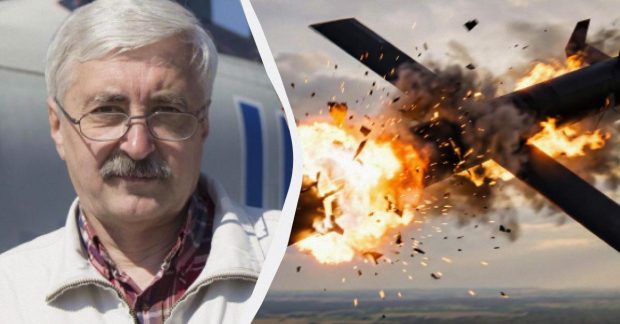
Aviation expert Valerii Romanenko has evaluated the actual production capacities of Russia's military-industrial complex regarding strike drones and missiles through 2027, dismissing apocalyptic projections.
 🛡️Security
Photo: UNIAN
Key points
- Projections of millions of Russian drones by 2027 are deemed unrealistic due to resource shortages.
- Ukrainian strikes on defense facilities and new Chinese export controls hinder enemy manufacturing.
- Jet drone production is realistically estimated at up to 100,000 units annually if facilities double.
The manufacturing capabilities of Russia's military-industrial complex directly impact the security situation across Ukraine, including frontline regions and communities such as Nikopol. Recently, aviation expert and leading researcher at the State Aviation Museum Valerii Romanenko commented on the realistic production volumes of Russian strike unmanned aerial vehicles and weaponry looking toward 2027.
Key Bottlenecks and Production Limitations
According to the expert, media speculations suggesting that Russia could manufacture millions of drones are entirely unrealistic. Despite attempts to expand production facilities at key locations, the aggressor faces severe shortages of qualified personnel and critical components. Furthermore, Ukrainian precision strikes target domestic factories producing electronics, fuel, and plastic parts necessary for these systems.
«The figure is unrealistic. Absolutely unrealistic, despite the fact that production areas in Alabuga are practically doubling,» Valerii Romanenko stated.
In addition to internal logistical and staffing challenges, international policy acts as another deterrent. China has recently updated its export control regulations covering specific components utilized in military hardware. While certain parts remain accessible, these new legal restrictions create obstacles for supply chains and procurement.
Future Projections and Weapon Types
Evaluating future output, the expert suggested that if production facilities successfully double, Russia might manufacture up to 100,000 jet-powered drones of the Geran type annually. Meanwhile, FPV drone production remains massive and decentralized, making precise tracking difficult. Additionally, small batches of compact cruise missiles such as Filin and Banderol are being deployed in limited numbers.
For residents of frontline areas like the Nikopol district, understanding the actual resource limits of the adversary is vital. It demonstrates that the enemy's defense sector is not infinite, and systematic counter-actions by Ukraine's Defense Forces alongside international restrictions continue to constrain hostile technological advancement.
Source UNIAN — unian.ua/war/virobnictvo-droniv-u-rf-chi-zmozhe-rosiya-vipustiti-20… ↗
Read next
 🚨Events
Air Assault Forces Deny Reports of New Border Breakthrough in Kursk Region
The Command of the Air Assault Forces has officially denied social media rumors regarding an alleged new breakthrough by Ukrainian forces and the capture of a settlement …
 🏛️Politics
Debate over NABU's methods: SAP prosecutor highlights the agency's media team
SAP prosecutor Rostyslav Batih addressed criticism regarding the substitution of evidence with media campaigns, praising the professionalism of NABU's video editors.
 ⚽Sport
ATP Finals Review: Carlos Alcaraz Dominance and the Next Generation Outlook
Sports commentators summarize the end-of-season ATP tournament, highlighting the triumph of Spanish tennis player Carlos Alcaraz and the success of young athletes.
 🩺Health
Scientists Identify Two Age Milestones When Human Immunity Ages the Fastest
A new study reveals that the human immune system does not age gradually, highlighting two sharp decline periods around age 40 and after 60.
 🧠AI Analysis
Artificial Intelligence on the Battlefield: How Ukrainian Ground Robots Move Toward Autonomy
Ukrainian developers of ground robotic systems are actively implementing artificial intelligence elements to minimize dependence on operators and communication.
 🎭Culture & Sport
Historical Field Discovery: How a Random Find Revealed Secrets of King Alfred
Archaeological mysteries sometimes emerge from routine fieldwork, such as the discovery of a medieval English monarch's jewel during plowing.